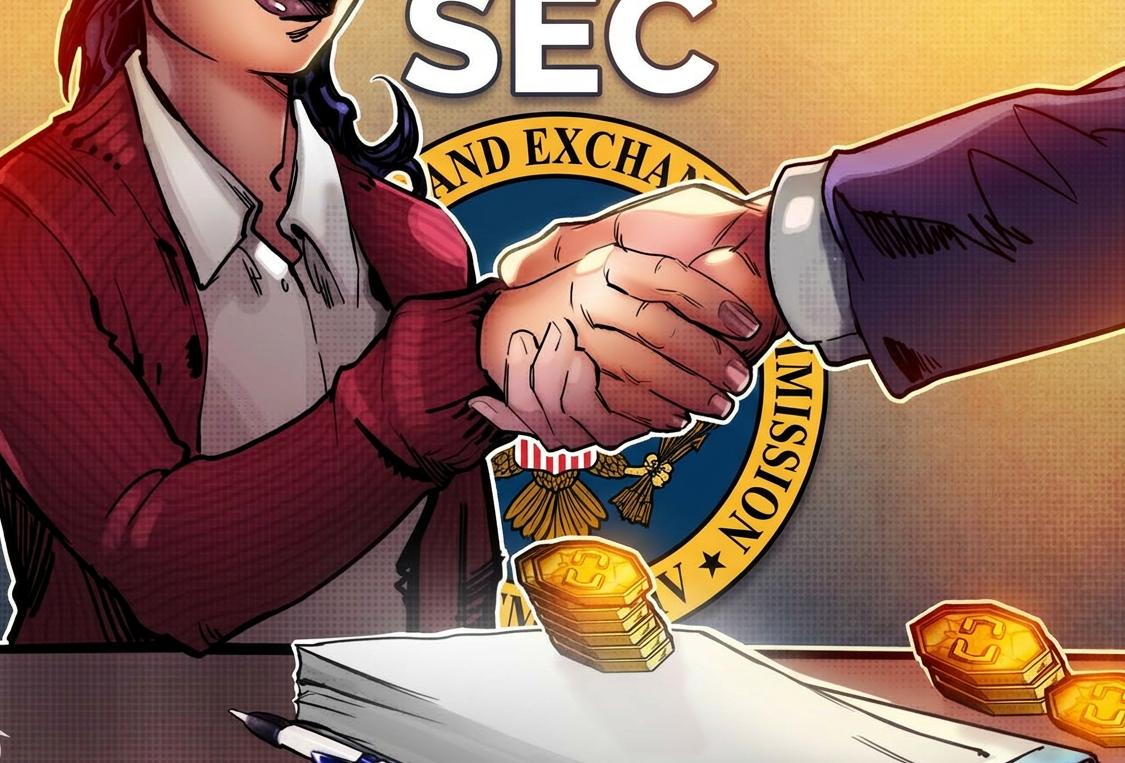

The regulatory landscape for decentralized finance (DeFi) continues to shift as the U.S. Securities and Exchange Commission (SEC) tightens its scrutiny on automated financial tools. In a recent series of remarks, SEC Commissioner Hester Peirce highlighted a critical concern: crypto vaults, on-chain lending products, and various automated asset management tools may inadvertently trigger U.S. securities laws, depending on their operational structure.
For years, the DeFi sector has operated under the assumption that "code is law" and that the removal of a centralized intermediary exempts a protocol from traditional financial regulations. However, Peirce’s comments suggest that the SEC is looking beyond the technical medium and focusing instead on the economic reality of these products. If a protocol behaves like an investment contract, the SEC argues, it should be regulated as one.
Understanding Crypto Vaults and On-Chain Lending
To understand the gravity of Commissioner Peirce's statements, one must first define the tools in question. Crypto vaults—often associated with "yield aggregators"—are smart contracts that automatically move a user's deposited assets across different DeFi protocols to maximize returns. They essentially act as automated portfolio managers, optimizing for the highest Annual Percentage Yield (APY) without requiring the user to manually migrate funds.
On-chain lending, on the other hand, allows users to lend their digital assets to borrowers in exchange for interest, typically facilitated by protocols like Aave or Compound. While these systems are designed to be peer-to-peer, the mechanism of depositing funds into a pool with the expectation of a profit—derived from the efforts of the protocol's developers or the algorithmic management of the system—mirrors the structure of traditional mutual funds or managed investment accounts.
The Howey Test and the 'Investment Contract' Dilemma
The central point of contention remains the Howey Test, the legal standard used to determine whether a transaction qualifies as an "investment contract." Under Howey, a security exists if there is: (1) an investment of money, (2) in a common enterprise, (3) with a reasonable expectation of profit, (4) derived from the entrepreneurial or managerial efforts of others.
Peirce suggests that many crypto vaults and lending products tick all four boxes. When a user deposits assets into a vault, they are making an investment. The vault constitutes a common enterprise. The user expects a profit (yield). Most importantly, that profit is often generated by the "managerial efforts" of the smart contract's architects or the governance token holders who vote on strategy changes. This alignment creates a significant legal vulnerability for DeFi developers and DAO (Decentralized Autonomous Organization) participants.
The Nuance of Structure and Operation
It is important to note that Commissioner Peirce did not state that all DeFi tools are securities by default. Instead, she emphasized that the structure and operation are the deciding factors. This implies that there may be a pathway to compliance or a way to build "non-security" products.
For instance, a truly decentralized lending protocol where the interest rate is determined purely by a mathematical formula of supply and demand—without any centralized management or "promoter"—might argue it does not meet the "managerial efforts" criteria of the Howey Test. However, once a project introduces "curated" vaults or "managed" strategies, the line between a software tool and a financial service blurs.
Potential Implications for the DeFi Ecosystem
If the SEC formally classifies these tools as securities, the ramifications for the industry would be profound:
1. Registration Requirements: Developers and platforms would be required to register their offerings with the SEC, a process that is notoriously cumbersome and expensive for lean, open-source projects.
2. KYC/AML Mandates: Securities laws typically require strict Know Your Customer (KYC) and Anti-Money Laundering (AML) protocols. This would effectively kill the anonymity and permissionless nature of DeFi vaults.
3. Geographic Restrictions: To avoid legal liability, many protocols might "geo-fence" U.S. users, limiting access to innovative yield-bearing products for American citizens.
4. Increased Litigation: We can expect a rise in enforcement actions against developers who create "automated" tools that the SEC deems to be unregistered investment schemes.
The Path Forward: Regulation vs. Innovation
The crypto community has long argued that the SEC is attempting to fit a "square peg in a round hole" by applying 1930s laws to 21st-century technology. Advocates for DeFi argue that smart contracts are not "managerial efforts" but are instead immutable pieces of software, similar to how a vending machine is not a retail employee.
However, the SEC’s perspective is rooted in investor protection. By classifying these products as securities, the agency aims to ensure that users are provided with transparent disclosures regarding risk, liquidity, and the underlying mechanisms of their yield.
Conclusion
Commissioner Peirce’s warnings serve as a wake-up call for the DeFi space. As crypto vaults and on-chain lending continue to attract billions in Total Value Locked (TVL), they have become too large for regulators to ignore. Whether these tools can evolve to coexist with U.S. securities laws—or whether they will be forced to migrate to more crypto-friendly jurisdictions—remains the defining question for the next era of decentralized finance.
For developers and investors, the lesson is clear: the technical elegance of a smart contract does not grant immunity from the law. Due diligence now requires not just an audit of the code, but an audit of the legal framework surrounding the economic incentive structure.