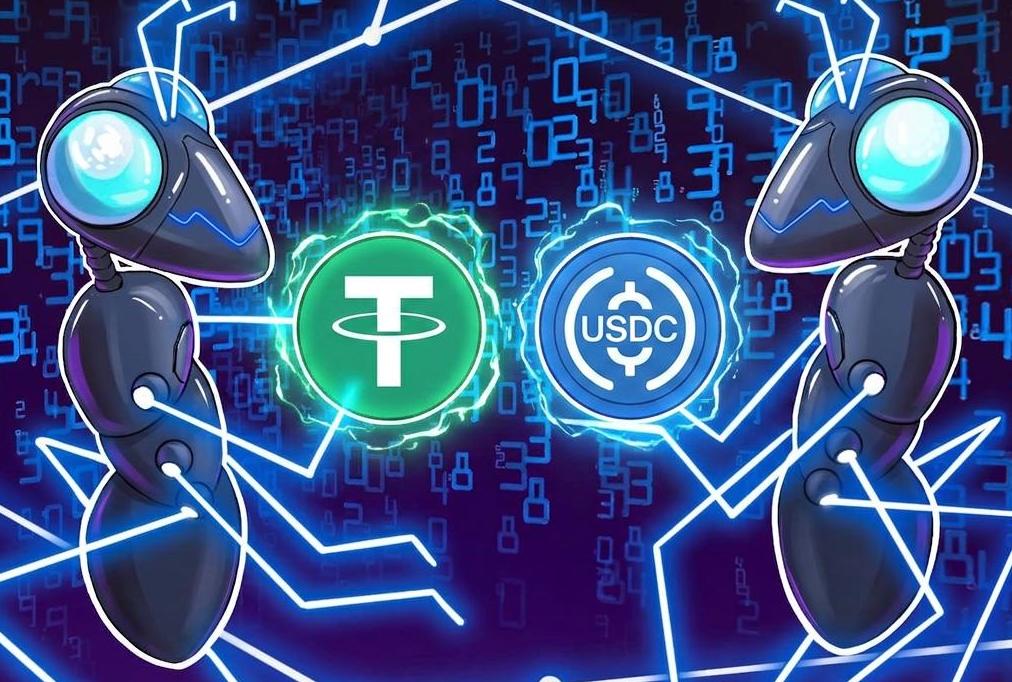

The feature offers European customers a voluntary path away from Tether’s USDT as MiCA rules reshape the region’s stablecoin market.
OKX Europe Introduces Seamless Conversion from USDT to MiCA-Compliant USDC
In a strategic move to align with the evolving regulatory landscape of the European Union, OKX Europe has announced a new feature allowing its users to convert Tether (USDT) to MiCA-compliant USDC. This initiative comes at a critical juncture as the Markets in Crypto-Assets (MiCA) regulation begins to redefine how stablecoins are issued, managed, and traded within the European Economic Area (EEA).
For years, USDT has reigned as the dominant liquidity provider in the crypto ecosystem. However, as the EU implements stringent requirements for "Asset-Referenced Tokens" (ARTs) and "Electronic Money Tokens" (EMTs), the industry is witnessing a shift toward assets that meet these high transparency and reserve standards. By providing a direct path to MiCA-compliant USDC, OKX is not only safeguarding its operational legality in Europe but also offering its users a proactive way to mitigate regulatory risk.
Understanding the MiCA Catalyst
The Markets in Crypto-Assets (MiCA) regulation is the first comprehensive legal framework for crypto-assets in the world. One of its primary targets is the stability and transparency of stablecoins. Under MiCA, issuers of stablecoins must be authorized as credit institutions or electronic money institutions (EMIs) and must maintain strict reserve assets to ensure a 1:1 redemption value.
Tether’s USDT has historically faced scrutiny regarding its reserve transparency, leading to a friction-filled relationship with European regulators. In contrast, Circle, the issuer of USDC, has aggressively pursued a strategy of compliance, positioning USDC as the "regulatory-first" stablecoin. By facilitating the transition from USDT to USDC, OKX is acknowledging that the "wild west" era of stablecoins in Europe is ending, replaced by a regime where compliance is the primary prerequisite for market access.
Why This Move Matters for European Traders
For the average trader in Europe, this update is more than just a technical feature; it is a risk management tool. Here are the primary reasons why the conversion to MiCA-compliant USDC is significant:
1. Regulatory Certainty: As MiCA deadlines loom, there is a growing possibility that non-compliant stablecoins could face trading restrictions or be delisted from regulated exchanges within the EU. Converting to USDC now prevents potential liquidity freezes in the future.
2. Enhanced Transparency: MiCA-compliant assets require rigorous auditing and public disclosure of reserves. Users moving to USDC gain the peace of mind that their holdings are backed by assets that meet EU legal standards.
3. Seamless Ecosystem Transition: Instead of forcing users to manually move funds to external wallets or other platforms to swap assets, OKX provides an integrated, voluntary path. This reduces the "friction cost" and security risks associated with external transfers.
The Strategic Positioning of OKX
OKX's decision to implement this feature underscores its ambition to remain a top-tier gateway for digital assets in Europe. By proactively offering a conversion mechanism, OKX avoids the "shock" of a sudden delisting, which often leads to panic selling and user churn. Instead, it guides its user base through a gradual migration.
This move also signals a broader trend among global exchanges. As jurisdictions like the EU, Hong Kong, and Dubai tighten their grip on digital asset frameworks, the industry is splitting into two camps: those who fight the regulators and those who build the infrastructure to support them. OKX is clearly leaning toward the latter, aiming to blend the agility of a global crypto exchange with the stability of a regulated financial institution.
The Broader Impact on the Stablecoin Market
The shift from USDT to USDC in Europe could have a ripple effect on the global stablecoin hierarchy. While USDT still holds the lion's share of global market cap, the "European Pivot" could either force Tether to adopt more transparent standards to regain its foothold in the EU or accelerate the rise of USDC as the primary institutional stablecoin.
Furthermore, this development encourages other European-focused platforms to implement similar conversion tools. We are likely to see a "domino effect" where liquidity gradually shifts from offshore, opaque stablecoins to onshore, audited ones, effectively professionalizing the stablecoin sector.
Conclusion: A New Era of Compliant Liquidity
The introduction of the USDT to MiCA-compliant USDC conversion tool by OKX Europe is a landmark step in the maturation of the crypto industry. It represents the transition from a period of unregulated growth to an era of sustainable, compliant utility. For European users, the message is clear: the future of digital dollars in the EU will be transparent, regulated, and compliant.
While USDT continues to be a powerhouse in the global market, the European experience under MiCA serves as a blueprint for how other regions might handle stablecoin regulation. For now, OKX is providing the bridge, ensuring that its users are not left behind as the regulatory tide rises.