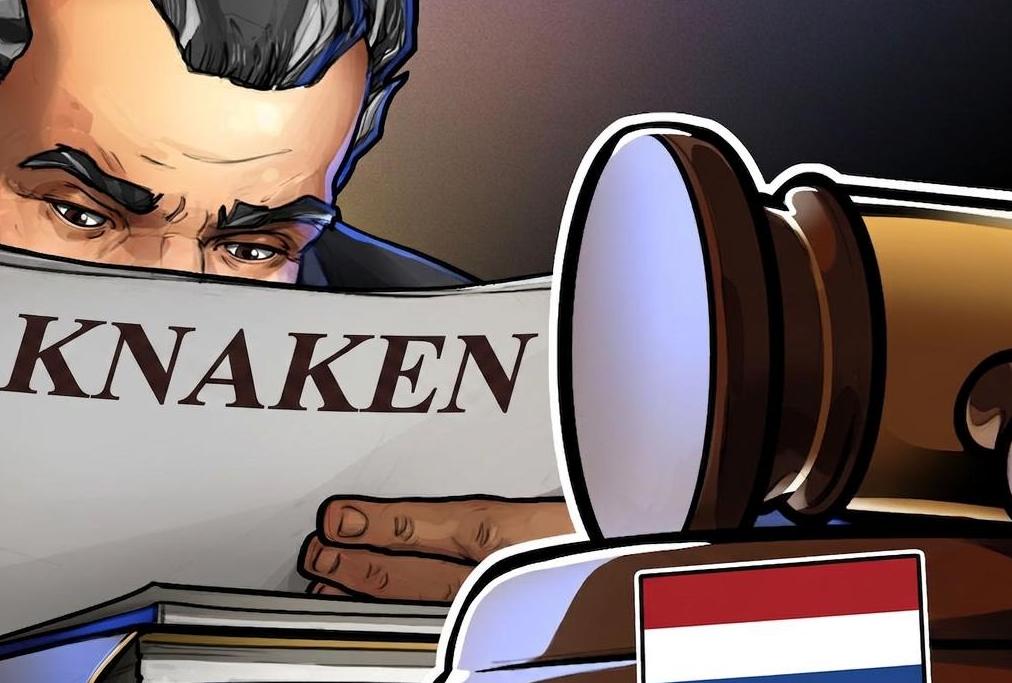

Dutch Court Declares Crypto Platform Knaken Bankrupt Over Missing Funds
The volatile world of digital assets has been rocked by another significant failure as a court in Rotterdam has officially declared the cryptocurrency platform Knaken bankrupt. The legal decision comes after a series of alarming reports regarding missing user funds, leaving thousands of investors in a state of uncertainty. The court's ruling emphasizes that bankruptcy is the only viable path toward an orderly settlement, as the platform lacks the necessary assets to satisfy its obligations to its clientele.
This development adds to a growing list of cryptocurrency service providers struggling with solvency and transparency, further intensifying the global debate over the necessity of stringent regulatory frameworks for digital asset custodians.
The Road to Insolvency: What Went Wrong at Knaken?
The collapse of Knaken was not an overnight event but rather the culmination of operational failures and a critical lack of liquidity. For several months, users had reported significant delays in withdrawing their assets, with some claiming that their support tickets were ignored or met with vague promises of "technical upgrades."
As the panic grew, it became evident that Knaken was experiencing a massive shortfall in its reserves. In the cryptocurrency industry, this often points to one of three scenarios: poor risk management, the unauthorized use of customer funds for proprietary trading, or a catastrophic security breach. While the platform had initially attempted to maintain a facade of stability, the discrepancy between its reported holdings and its actual liquid assets became too large to ignore.
The Rotterdam court's decision to initiate bankruptcy proceedings was triggered by the realization that Knaken could no longer meet its liabilities. The court noted that without a structured legal process, any attempt to recover funds would likely lead to a "first-come, first-served" chaos, unfairly disadvantaging the majority of users.
The Legal Implications of the Rotterdam Court Ruling
The declaration of bankruptcy is a double-edged sword for Knaken's users. On one hand, it provides a legal framework for the liquidation of remaining assets and the distribution of funds. On the other, it confirms the grim reality that many users may only recover a fraction of their original investments.
Under Dutch insolvency law, a court-appointed trustee (curator) will now take over the management of Knaken. The primary goal of the trustee is to inventory all remaining assets, including hardware, software licenses, and remaining crypto wallets, to determine the total value available for creditors. This process is often grueling and can take months, if not years, to complete.
One of the most contentious points in these proceedings is usually the classification of user funds. In many jurisdictions, the legal battle centers on whether the deposited crypto was held "in trust" for the user or if it became the property of the platform upon deposit. If the latter is true, users are treated as unsecured creditors, placing them at the back of the line behind secured lenders and tax authorities.
A Symptom of a Broader Industry Crisis
The fall of Knaken is not an isolated incident. It mirrors the catastrophic collapses of giants like FTX and Celsius, which revealed the dangers of "rehypothecation"—the practice of lending out user assets to generate yield. When markets downturn or a bank run occurs, platforms that have over-leveraged their users' funds find themselves unable to meet withdrawal demands.
This pattern underscores the critical importance of the mantra "Not your keys, not your coins." The Knaken bankruptcy serves as a stark reminder that centralized exchanges (CEXs) act as intermediaries. While they offer convenience and liquidity, they introduce a layer of counterparty risk that is entirely absent when using non-custodial wallets.
The Path Forward for Affected Investors
For those who held assets on Knaken, the immediate next step is to document all balances and transaction histories. Users are advised to keep meticulous records of their account statements, as these will be essential when filing claims with the bankruptcy trustee.
Furthermore, the industry is seeing a surge in demand for "Proof of Reserves" (PoR). This cryptographic method allows platforms to prove they hold the assets they claim to have without revealing sensitive user data. Experts argue that PoR should transition from a voluntary "marketing feature" to a mandatory legal requirement for any platform operating within the European Union under the MiCA (Markets in Crypto-Assets) regulation.
Final Thoughts: The Urgency of Regulation
The bankruptcy of Knaken is a tragedy for the individual investors involved, but it is a loud wake-up call for the broader ecosystem. The lack of transparency and the absence of consumer protection insurance in the crypto space continue to leave users vulnerable to corporate mismanagement.
As the Rotterdam court begins the orderly settlement process, the crypto community must reflect on the necessity of decentralization. While the allure of high yields and easy trading is strong, the safety of cold storage and self-custody remains the only foolproof way to protect digital wealth from the failures of centralized entities.