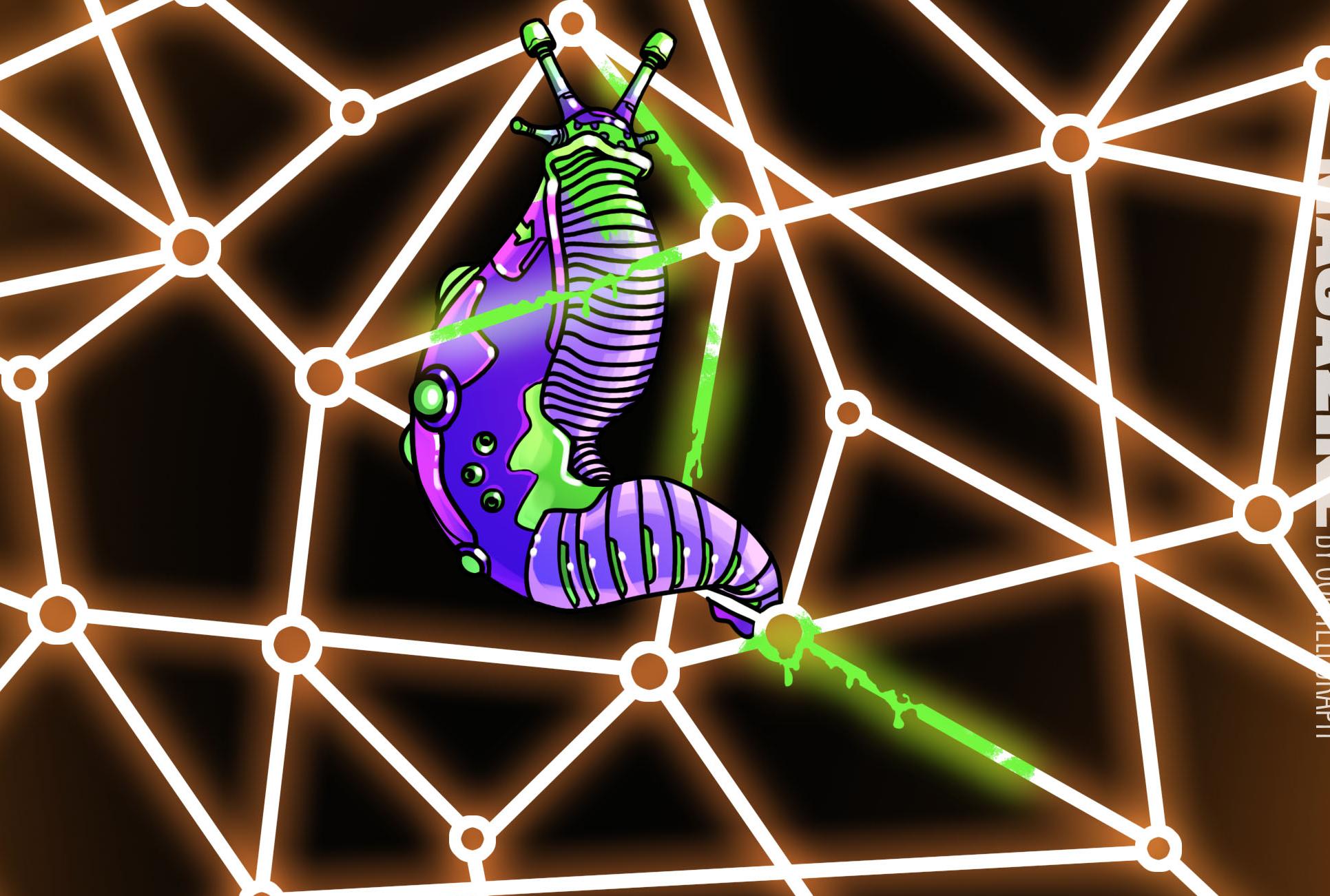

Are the fears of an AI driven hacking epidemic totally overblown, or is this just the lull before the storm?
The Paradox of AI in Decentralized Finance
The Decentralized Finance (DeFi) ecosystem has always been a high-stakes laboratory. It is a place where financial innovation moves at breakneck speed, often bypassing the rigorous regulatory safety nets of traditional banking. However, this agility comes with a cost: vulnerability. For years, the primary threats to DeFi have been human-led—flash loan attacks, oracle manipulation, and classic social engineering. But as Large Language Models (LLMs) and autonomous AI agents evolve, a new anxiety has gripped the community: the prospect of an AI-driven hacking epidemic.
At first glance, the current data suggests that these fears may be overstated. We have not yet seen a "black swan" event orchestrated entirely by an autonomous AI agent. However, a deeper analysis reveals that we are not in a state of safety, but rather in a transition period. The tools are being sharpened, the models are being trained on open-source smart contract vulnerabilities, and the window for "human-speed" security is closing.
Why the Threat Feels Overstated Today
To understand why some experts believe the panic is premature, we must look at the current limitations of AI. While tools like ChatGPT or Claude can write basic Solidity code or identify common bugs, they still struggle with the "holistic logic" of complex DeFi protocols. DeFi hacks rarely stem from a simple syntax error; they usually result from an intricate chain of logical failures across multiple interconnected protocols (composability).
Current AI lacks the deep, intuitive understanding of "state" and "intent" required to architect a multi-step exploit across three different liquidity pools and a cross-chain bridge. Most "AI-powered" attacks reported today are actually "AI-assisted," where a human hacker uses AI to speed up the auditing process or write a phishing email more convincingly. In this sense, AI is currently a force multiplier for existing threats, rather than a new category of threat itself.
The Tipping Point: From Assistance to Autonomy
The reason the "overstated" narrative is dangerous is that it ignores the exponential growth curve of machine learning. We are rapidly moving toward a reality where AI agents can operate autonomously. The shift from AI-assisted hacking to AI-driven hacking will likely be triggered by three primary catalysts.
First is the rise of automated vulnerability discovery. We are seeing the emergence of AI agents capable of fuzzing smart contracts—running millions of permutations of inputs to find a single edge case that leads to a drain. When AI can identify a zero-day vulnerability in seconds—a task that takes a human auditor weeks—the attack surface expands exponentially.
Second is the democratization of sophisticated exploits. Previously, executing a complex flash loan attack required deep technical knowledge of EVM (Ethereum Virtual Machine) internals. AI lowers the barrier to entry, allowing low-skill actors to execute high-skill attacks by simply describing the target and the goal to an AI agent.
Third is real-time adaptation. Human hackers must plan their attacks and hope the protocol doesn't patch the bug before execution. An AI agent could potentially monitor the mempool in real-time, identify a vulnerability the moment a contract is deployed, and execute the exploit within a single block.
The Arms Race: AI vs. AI
If the offensive capabilities of AI are escalating, the only viable defense is a symmetric response. The DeFi industry is currently entering an AI arms race. We are seeing the rise of "AI Sentinels"—autonomous security agents that monitor protocol health and can trigger emergency pauses or "circuit breakers" the moment an anomalous transaction pattern is detected.
The future of DeFi security will not be found in static audits performed once a year, but in continuous, real-time AI monitoring. The battle will be fought between an attacking AI searching for a logical loophole and a defending AI attempting to predict that move and shield the liquidity. This creates a precarious equilibrium where the winner is simply whoever has the more advanced model and the faster compute power.
Can DeFi Still Be Trusted?
The looming threat of AI-driven hacks tests the core philosophy of DeFi: "Code is Law." If the code can be manipulated by an entity that processes information a million times faster than a human, does the "law" still hold? To maintain trust, the industry must move beyond the "deploy and pray" mentality.
True resilience will require a shift toward formal verification—mathematically proving that a contract behaves as intended—and the implementation of decentralized insurance layers that can protect users when AI finds the inevitable gap. The trust in DeFi will no longer come from the belief that a contract is "unhackable," but from the assurance that the ecosystem is resilient enough to survive an attack and recover automatically.
Final Verdict: The Calm Before the Storm
To summarize, the fear of an AI hacking epidemic is not a prophecy of immediate doom, but a necessary warning. While we haven't seen the "AI singularity" of DeFi exploits yet, the infrastructure is being laid. The current lull is not a sign of safety; it is a grace period.
For developers, investors, and users, the message is clear: the era of relying on manual audits is ending. Those who integrate AI-driven security today will survive the epidemic of tomorrow. In the world of crypto, complacency is the greatest vulnerability of all.