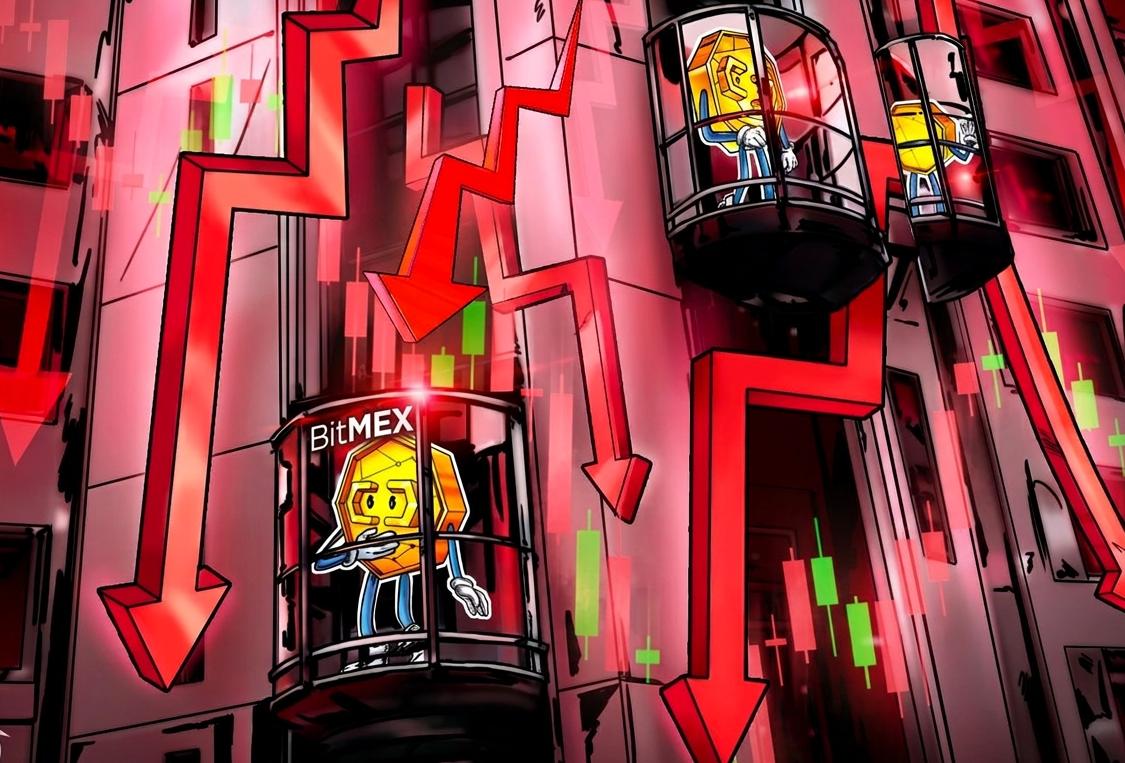

BitMEX’s BMEX token plunged about 90% after the exchange announced plans to shut down, ending nearly 12 years in business as its Bitcoin futures market share shrank.
The Fall of a Giant: BitMEX Announces Shutdown, BMEX Token Plummets
In a move that has sent shockwaves through the cryptocurrency trading community, BitMEX, once the undisputed king of Bitcoin derivatives, has announced its decision to shut down operations. The fallout was immediate and brutal: the exchange's native token, BMEX, crashed by approximately 90% within hours of the announcement, erasing billions in perceived market value and leaving investors scrambling for liquidity.
For over a decade, BitMEX was the epicenter of high-leverage trading, pioneering the perpetual swap and building a legacy of volatility and high-stakes gambling. However, the announcement marks the end of an era, signaling that even the most entrenched pioneers of the crypto space are not immune to the shifting tides of regulation, competition, and changing market dynamics.
Analyzing the Crash: Why BMEX Collapsed
The 90% crash of the BMEX token is a textbook example of a "liquidity vacuum." When an exchange announces its closure, the utility of its native token typically evaporates instantly. Since BMEX was primarily designed to provide ecosystem benefits, fee discounts, and governance within the BitMEX environment, the news of a shutdown rendered the token functionally obsolete.
Panic selling ensued as holders attempted to exit their positions simultaneously. With the primary venue for the token's utility disappearing, there was virtually no "buy side" support, leading to a vertical drop in price. For many traders, the BMEX token shifted from a speculative asset to a "dead coin" in a matter of minutes.
The Slow Decline: How BitMEX Lost Its Dominance
The shutdown did not happen in a vacuum. BitMEX's demise was a slow burn characterized by a series of strategic missteps and external pressures. At its peak, BitMEX held a near-monopoly on Bitcoin futures. However, several factors contributed to its shrinking market share:
1. Regulatory Warfare: BitMEX spent years in a legal tug-of-war with US regulators, including the CFTC. The resulting fines and the forced restriction of US users severely hampered its growth and damaged its reputation as a safe harbor for institutional capital.
2. The Rise of Competition: The emergence of Binance Futures and Bybit fundamentally changed the landscape. These competitors offered deeper liquidity, a wider array of tradable assets beyond Bitcoin, and more aggressive marketing strategies that lured traders away from the aging BitMEX interface.
3. The Shift in Trader Sentiment: As the market matured, traders moved away from the "Wild West" atmosphere of high-leverage gambling toward platforms that offered more robust risk management tools and compliant frameworks.
The Broader Implications for the Crypto Derivatives Market
The closure of BitMEX is more than just the failure of a single company; it is a case study in the lifecycle of crypto exchanges. The industry is currently undergoing a "great consolidation," where smaller or outdated platforms are being absorbed or erased by behemoths that can navigate the complex global regulatory environment.
Furthermore, this event highlights the inherent risk of "exchange tokens." The BMEX crash serves as a stark reminder that native tokens are often tied directly to the health and viability of the platform they represent. When the platform fails, the token rarely survives.
What Happens Next for BitMEX Users?
Following the announcement, the primary concern for users is the recovery of funds. BitMEX has indicated a wind-down process, but in the volatile world of crypto, "shutdown" can mean anything from a graceful exit to a chaotic bankruptcy. Users are urged to withdraw their assets immediately and monitor official communication channels for instructions regarding the settlement of open positions.
Industry analysts suggest that the vacuum left by BitMEX will likely be filled by decentralized perpetual exchanges (DEXs) like dYdX and GMX, as traders increasingly prioritize non-custodial solutions over centralized intermediaries that can vanish overnight.
Final Thoughts: A Lesson in Adaptability
BitMEX was a pioneer that helped define the leverage-trading culture of the 2017 and 2021 bull runs. However, its inability to pivot toward a sustainable, compliant, and diversified business model led to its eventual obsolescence. The 90% crash of BMEX is the final nail in the coffin for a platform that once dreamed of dominating the financial world.
As the dust settles, the crypto community is left with a vital lesson: in an industry that moves at light speed, stagnation is the equivalent of failure. Innovation is not a one-time event but a continuous requirement for survival.