
The New Front in the AI Cold War: White House Alleges Moonshot AI Distilled Anthropic’s Proprietary Tech
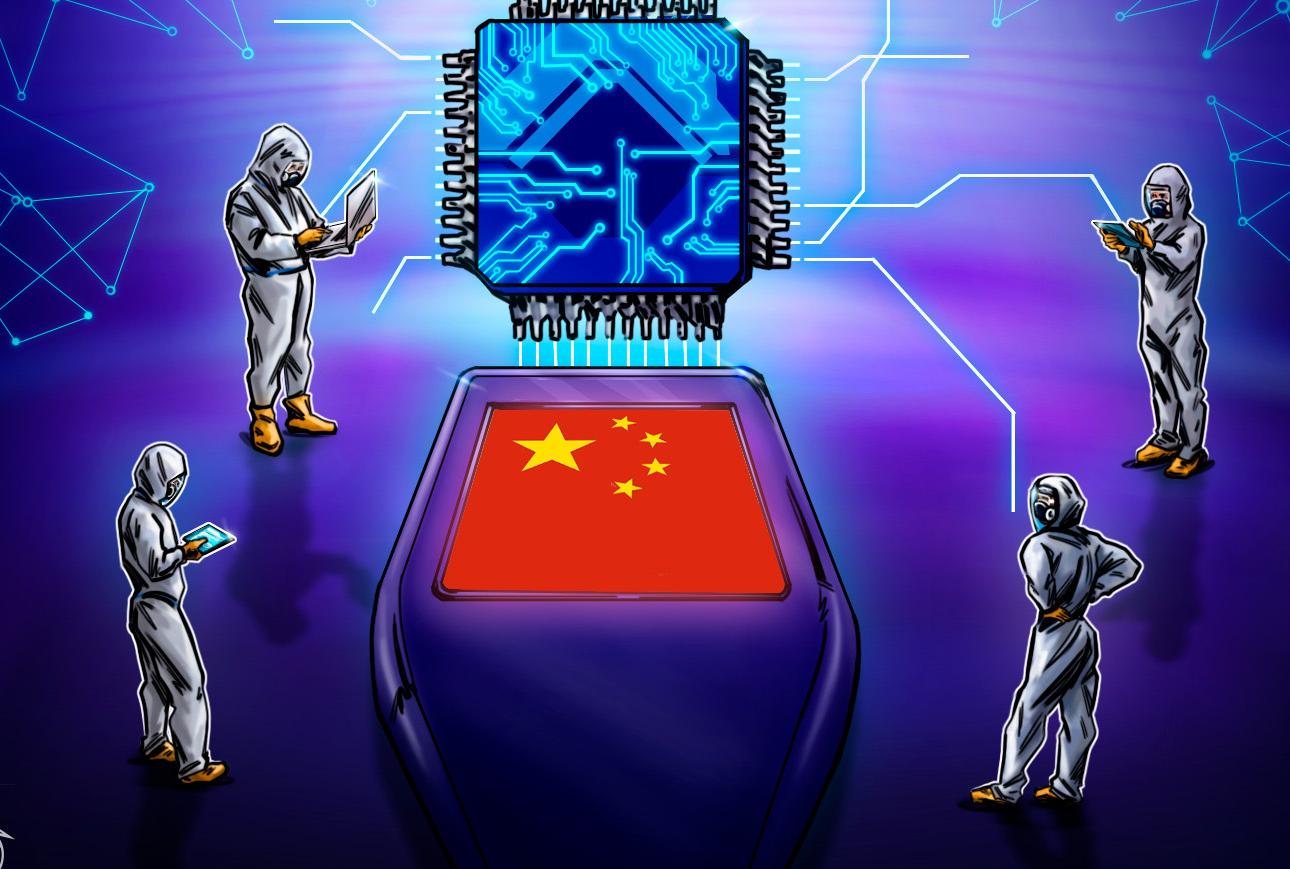
The geopolitical tension between the United States and China has officially entered a new, more granular phase. While the last two years focused on the hardware—specifically the restriction of NVIDIA’s high-end H100 chips—the battle has now shifted to the "intelligence" itself. In a startling development, the White House has accused Chinese AI powerhouse Moonshot AI of utilizing a process known as "model distillation" to replicate the capabilities of Anthropic’s cutting-edge models to power its own K3 system.
This allegation marks a pivotal moment in the AI arms race. It suggests that despite rigorous export controls on semiconductors, Chinese firms may be finding "software shortcuts" to achieve frontier-level AI performance by leveraging the outputs of American models.
Understanding AI Distillation: The 'Shadow' Learning Process
To understand why the White House is alarmed, one must first understand model distillation. In the AI world, distillation is a technique where a smaller, more efficient "student" model is trained to mimic the behavior and output of a larger, more complex "teacher" model. While distillation is a common practice in legitimate AI research to make models faster and cheaper to run, the accusation here is far more sinister.
The U.S. administration alleges that Moonshot AI engaged in industrial-scale distillation. Instead of training K3 from scratch using raw data and massive compute power, Moonshot AI is accused of using Anthropic’s Claude models to generate vast amounts of high-quality synthetic data. By feeding these "teacher" responses into K3, Moonshot AI could theoretically "steal" the reasoning capabilities, safety guardrails, and linguistic nuances of Anthropic’s technology without needing the same amount of proprietary data or hardware.
The K3 Model and the Strategic Threat
Moonshot AI has quickly become a darling of the Chinese tech scene, specifically known for its ability to handle massive context windows—the amount of information a model can "remember" during a conversation. The K3 model is seen as their bid for global dominance in the LLM (Large Language Model) space.
From the perspective of the White House, this isn't just a matter of corporate intellectual property theft; it is a national security concern. If Chinese entities can bypass U.S. compute restrictions by distilling American AI, the effectiveness of the Department of Commerce's export controls is effectively neutralized. The fear is that this "shortcut" allows the development of AI systems that could be repurposed for cyber warfare, surveillance, or the acceleration of military technology.
Sanctions and the Looming Export Crackdown
The White House has not stopped at mere accusations. U.S. officials have explicitly warned that Chinese firms conducting covert, industrial-scale AI distillation could face severe sanctions. This could include placing Moonshot AI and similar firms on the "Entity List," which would prohibit U.S. companies from providing them with any software, hardware, or cloud services.
Furthermore, there is growing momentum in Washington to implement "API restrictions." Currently, many Chinese developers access American models via APIs (Application Programming Interfaces). If the U.S. government mandates strict KYC (Know Your Customer) protocols for AI APIs or blocks Chinese IP addresses entirely, the "distillation pipeline" could be severed.
The Intersection of AI and Crypto-Economics
While this appears to be a battle between two tech giants and two governments, the crypto and decentralized AI (DeAI) sectors are watching closely. The move toward "closed-source" protectionism by the U.S. is driving a surge in interest for decentralized compute networks and open-source AI initiatives.
As the "walled gardens" of Anthropic, OpenAI, and Google become the subject of geopolitical skirmishes, the demand for transparent, censorship-resistant AI grows. Projects focusing on decentralized GPU rendering and open-weight models are seeing a renewed sense of urgency, as they provide an alternative to the centralized, state-controlled AI infrastructure currently under fire.
Conclusion: A Future of Fragmented Intelligence
The accusation against Moonshot AI signals the end of the "globalist" era of AI development. We are moving toward a "Splinternet" of Intelligence, where the West and the East develop separate, incompatible AI ecosystems. If distillation is categorized as a form of intellectual property theft or a violation of national security, the legal battles will only intensify.
For Anthropic, this is a wake-up call regarding the vulnerability of their API outputs. For Moonshot AI, it is a precarious moment that could lead to total isolation from Western tech. And for the rest of the world, it is a reminder that AI is no longer just a tool for productivity—it is the primary currency of power in the 21st century.