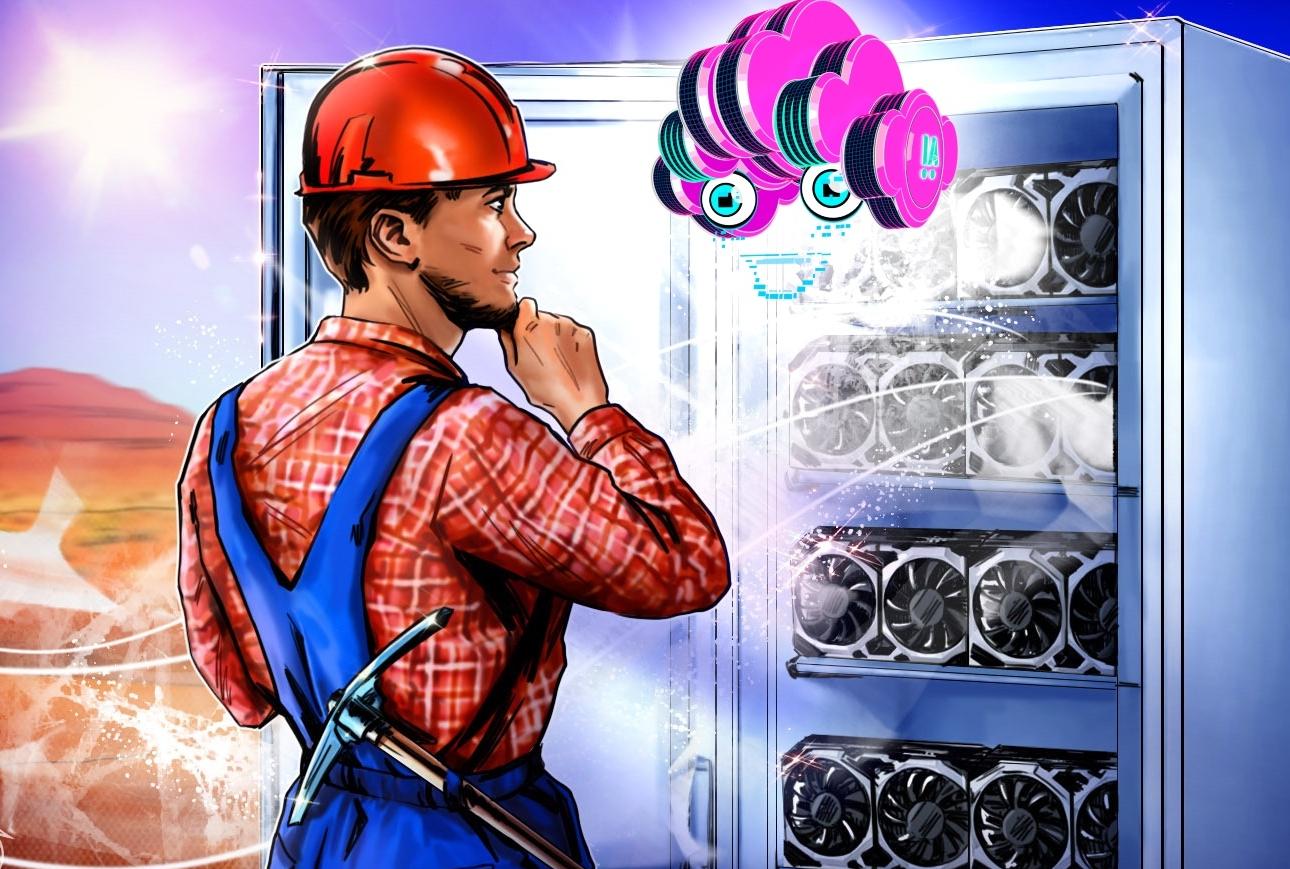

Bitcoin miners rallied as investors cheered multi-billion-dollar AI infrastructure contracts, underscoring the sector’s accelerating shift toward data centers and cloud computing.
The Great Pivot: From Hashrate to High-Performance Computing (HPC)
For years, the narrative surrounding Bitcoin mining companies was singular: buy more ASICs, secure the network, and hope the price of BTC climbed. However, a tectonic shift is occurring within the industry. The latest surge in stock prices for companies like Hut 8 and IREN (Iris Energy) signals a market realization that the true value of these firms may not lie solely in their digital gold production, but in their physical infrastructure.
The convergence of Bitcoin mining and Artificial Intelligence (AI) is not accidental. Both industries require the same fundamental ingredients: massive amounts of power, sophisticated cooling systems, and high-density data center environments. As the global demand for AI compute explodes—driven by Large Language Models (LLMs) and generative AI—the "bottleneck" has become the availability of power-ready real estate. Bitcoin miners, who have spent a decade securing power grid agreements and building industrial-scale warehouses, are now the primary landlords of the AI revolution.
Hut 8 and IREN: Leading the Charge
The recent market optimism centers on strategic deals involving Hut 8 and IREN, which have pivoted aggressively toward High-Performance Computing (HPC) and AI cloud services. By diversifying their revenue streams, these companies are insulating themselves from the volatility of the Bitcoin price and the periodic "shocks" of network halving events.
Hut 8 has been particularly active in expanding its managed services, transforming its operational footprint into a versatile hub for AI workloads. Similarly, IREN has leaned into its ability to scale power capacity rapidly, positioning itself as a critical infrastructure provider for AI firms that cannot wait years for traditional data center construction.
Investors are responding positively because this transition changes the valuation model of these stocks. Instead of being viewed as high-beta proxies for Bitcoin, these companies are starting to be valued as AI infrastructure plays—similar to how the market views Nvidia or Vertiv. The ability to command steady, long-term contracts from AI enterprises provides a predictable cash flow that offsets the cyclical nature of crypto mining.
Why AI is the Perfect Hedge for Miners
The synergy between Bitcoin mining and AI is deeper than just shared real estate. The concept of "flexible power" allows these firms to optimize their energy usage in real-time. During periods of high energy costs or grid stress, miners can pivot their capacity toward AI workloads or curtail mining operations to sell power back to the grid, all while maintaining the high-uptime requirements of AI clients.
Furthermore, the "Halving" mechanism of Bitcoin—which reduces the rewards for mining—has historically put pressure on miner margins. By diversifying into AI, firms like Hut 8 and IREN create a financial cushion. If Bitcoin's profitability dips, the AI data center revenue acts as a stabilizer, ensuring the company remains solvent and capable of continuing its infrastructure expansion.
The Infrastructure Race: Power as the New Gold
The current gold rush isn't for gold or even Bitcoin—it is for megawatts. The ability to secure 100MW or 500MW of power capacity is now the ultimate competitive advantage in the tech sector. Many traditional cloud providers are struggling to find sites with the necessary power density to support the latest generation of GPUs (such as Nvidia's H100s).
Bitcoin miners have a head start. Having spent years navigating the complexities of energy regulations, transformer installations, and cooling technologies, they possess the "shovel" for the AI gold rush. When IREN or Hut 8 announces a new AI-focused deal, the market isn't just cheering for the immediate revenue—it is recognizing the strategic moat these companies are building around their energy assets.
Risks and Roadblocks in the Transition
Despite the bullish momentum, the path to becoming an AI powerhouse is not without hurdles. The capital expenditure (CapEx) required to transition from Bitcoin mining hardware to AI-grade servers is astronomical. GPUs are significantly more expensive than ASICs, and the cooling requirements for AI chips are far more stringent than those for mining rigs.
Additionally, there is the risk of "execution failure." Operating a Bitcoin mine is a relatively straightforward process of plugging in machines and running software. Managing a multi-tenant AI cloud environment requires a different set of technical competencies, including complex networking, SLA (Service Level Agreement) management, and high-level cybersecurity protocols.
Final Verdict: A New Era for Crypto Stocks
The rally in AI-focused Bitcoin mining stocks represents a maturation of the industry. We are witnessing the birth of a new asset class: the "Energy-Compute Hybrid." By leveraging their power infrastructure to fuel the AI revolution, companies like Hut 8 and IREN are evolving from speculative miners into indispensable pillars of the global digital economy.
As long as the demand for AI compute continues to outstrip the available power supply, the pivot toward HPC will remain the dominant strategy for miners. For investors, the opportunity lies in identifying which firms can successfully bridge the gap between the decentralized world of blockchain and the centralized demand of enterprise AI.