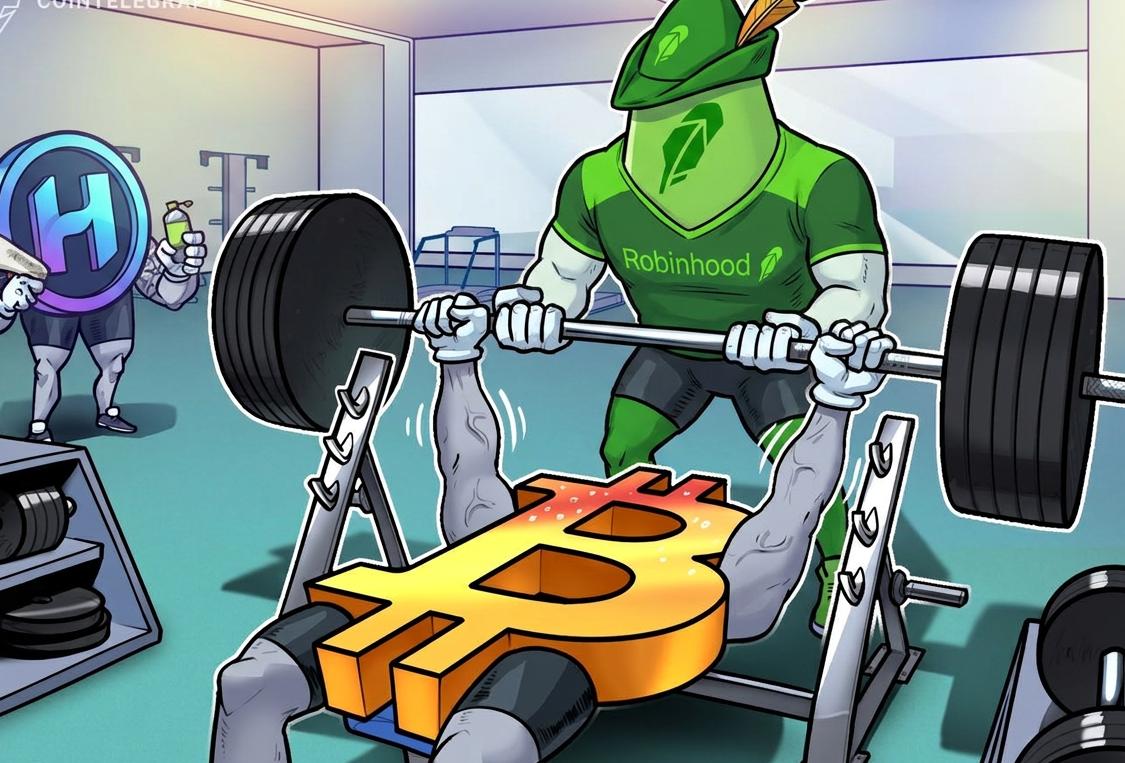

Bitwise predicted that Hyperliquid and Robinhood TradFi ventures should form the basis for a crypto bull-market comeback that would lift Bitcoin and Ether.
The New Catalyst: Why Bitwise Sees a Paradigm Shift in the Next Bull Run
The cryptocurrency market has historically operated in cycles, driven by narrative shifts—from the early days of "digital gold" to the explosion of DeFi and the NFT craze. However, as we edge closer to the next major bullish phase, the catalysts are evolving. According to a senior executive at Bitwise, one of the world's leading crypto asset managers, the next surge in Bitcoin (BTC) and Ethereum (ETH) prices won't just be about institutional adoption in the abstract, but specifically about the integration of high-performance decentralized trading and the "democratization" of access through TradFi giants like Robinhood.
The core of this thesis lies in the convergence of two distinct worlds: the hyper-efficient, on-chain derivatives market represented by Hyperliquid, and the massive retail distribution networks controlled by platforms like Robinhood. When these two forces align, they create a "lift" effect that pushes the primary assets—Bitcoin and Ether—to new heights by increasing liquidity and onboarding a new echelon of traders.
Hyperliquid: The Bridge Between DeFi and Professional Trading
To understand why Bitwise is highlighting Hyperliquid, one must look at the current friction in decentralized finance (DeFi). For years, DEXs (Decentralized Exchanges) struggled with latency, high gas fees, and clunky user interfaces, making them unattractive to professional traders who are used to the seamless experience of Binance or Coinbase.
Hyperliquid has changed this dynamic by building a high-performance L1 blockchain specifically optimized for a perpetual exchange. By offering a user experience that rivals centralized exchanges while maintaining the self-custodial benefits of DeFi, Hyperliquid is attracting a "sophisticated" class of trader. When professional capital flows into these high-leverage environments on-chain, it creates a ripple effect. The demand for collateral—primarily BTC and ETH—increases, tightening supply and driving prices upward.
Moreover, the rise of Hyperliquid signifies a shift toward "app-chains" and specialized infrastructure. As more users realize they can trade with institutional-grade speed without surrendering their private keys, the overall legitimacy and volume of the crypto ecosystem grow, providing a robust foundation for the next bull market.
The Robinhood Effect: Retail Onboarding at Scale
While Hyperliquid captures the sophisticated trader, Robinhood captures the masses. Bitwise suggests that Robinhood's continued expansion into crypto services acts as a critical gateway for the "retail army." The beauty of Robinhood lies in its frictionless onboarding process; it removes the psychological barrier of entry for millions of users who find traditional crypto wallets intimidating.
As Robinhood integrates deeper crypto functionalities—such as staking, expanded asset listings, and potentially more advanced trading tools—it effectively creates a pipeline that feeds capital directly into the market. Historically, bull markets are characterized by retail euphoria. By simplifying the path from a US dollar bank account to a Bitcoin position, Robinhood ensures that when the "crypto fever" hits the general public, the capital inflow will be faster and more voluminous than in previous cycles.
The Symbiosis of TradFi and DeFi
The intersection of these two platforms represents a broader trend: the blurring line between Traditional Finance (TradFi) and Decentralized Finance (DeFi). The Bitwise executive's insight points to a strategic synergy. On one hand, you have the mass-market reach of Robinhood; on the other, you have the cutting-edge financial primitives of Hyperliquid.
In a typical bull market, Bitcoin acts as the primary vehicle for value, while Ethereum serves as the utility layer. When retail users enter via Robinhood, they typically start with BTC. As they become more adventurous, they migrate toward the ecosystem, eventually discovering the high-yield and high-leverage opportunities offered by platforms like Hyperliquid. This creates a "value ladder" where capital flows from simple holdings to complex financial strategies, all while keeping the primary assets as the bedrock of the economy.
What This Means for Bitcoin and Ether
For Bitcoin, this means a diversified demand shock. It is no longer just about the Spot ETFs (which brought in the "big money" institutions) but about the systemic integration into the daily trading habits of both the retail gamer and the professional hedge fund manager. This dual-pronged attack on liquidity—from both the top-down (Institutional/ETFs) and bottom-up (Retail/Hyperliquid)—creates a powerful price floor.
Ethereum, meanwhile, stands to benefit from the growth of the L1 and L2 ecosystems. As Hyperliquid proves the viability of high-performance chains, the broader appetite for smart-contract platforms increases. Ethereum remains the primary settlement layer for the vast majority of DeFi value, meaning that as the "lift" occurs, ETH is positioned to capture a significant portion of the speculative and utility-driven capital.
Conclusion: Preparing for the Convergence
The next crypto bull market will not be a carbon copy of 2017 or 2021. It will be characterized by better infrastructure, smarter retail participants, and a tighter integration with traditional financial rails. By identifying Hyperliquid and Robinhood as key drivers, Bitwise is highlighting a shift toward efficiency and accessibility.
As these platforms continue to evolve, the "lift" they provide to Bitcoin and Ether may be the catalyst that finally pushes the asset class into the mainstream consciousness, transitioning crypto from a speculative niche into a foundational element of the global financial system.